8 Ways to Get a Better Night’s Sleep During Menopause
Between menopause and dealing with a frozen shoulder, getting comfortable and staying asleep can feel like a challenge. Since losing family members, I’ve also noticed that if I have a dream or nightmare, I often wake up right afterward and have a hard time going back to sleep. There is something especially frustrating about being tired and wanting to rest, yet finding yourself awake again. When physical discomfort and the emotions that come with loss overlap, bedtime can feel more complicated than simply turning off the lights.

I wanted to talk about this because so many conversations about menopause focus on what happens during the day. The nights deserve some attention, too. Finding a comfortable position with a frozen shoulder is one part of my experience, and getting back to sleep after waking is another. I don’t have a perfect formula, and I don’t want anyone reading this to feel as though a difficult night means she has done something wrong. Sometimes we need small changes in our routines, and sometimes we need more support than a list of tips can provide.
The research helps put those struggles in perspective. A 2024 review of 37 studies involving 29,284 menopausal women estimated that 50.8% experienced poor sleep quality. That is about half of the women represented in those studies. Poor sleep quality is not the same as a diagnosis of insomnia, and that number cannot explain what is happening for any one person, but it shows how common these concerns are.
Frozen shoulder adds another layer to the conversation. The American Academy of Orthopaedic Surgeons says it occurs more often in women and most commonly affects people ages 40 to 60. That overlap with midlife does not prove that menopause causes it. A possible hormone connection remains under study, and I’m careful not to treat it as an established explanation for my shoulder. What matters to me is acknowledging the discomfort while getting appropriate guidance.
These eight ideas begin with practical habits that don’t require buying anything. Farther down, I’m also sharing a mattress option and products that are part of my personal routine. They are comfort considerations and personal choices, with no guarantee of better sleep. You deserve advice that leaves room for your own needs, your budget and a conversation with your healthcare professional.
1. Give yourself time to wind down
A quieter transition into bedtime can give the evening a gentler pace. Try reading something calming, listening to soft music, praying or practicing a relaxation exercise that feels comfortable to you. It doesn’t need to become a complicated checklist. Choosing one peaceful activity can be a more realistic place to begin than trying to create an entirely new routine overnight.
Consider putting stimulating tasks and upsetting content aside as bedtime approaches. If scrolling or checking messages leaves you more alert, give yourself permission to stop for the night. The goal is to make space for rest without turning relaxation into another thing you have to perform perfectly.
2. Keep a fairly consistent sleep schedule
A fairly steady bedtime and wake-up time can help support your sleep routine. Pay particular attention to when you get up, including on weekends, rather than changing your schedule dramatically after every rough night. A predictable rhythm gives you a useful starting point as you notice what helps and what makes evenings harder.
Life will still happen, and consistency does not mean rigidity. Aim for a routine you can live with. If your sleep problems persist, ask for help with a plan that suits your circumstances instead of blaming yourself for not following a schedule closely enough.
3. Make your bedroom cool, dark and quiet
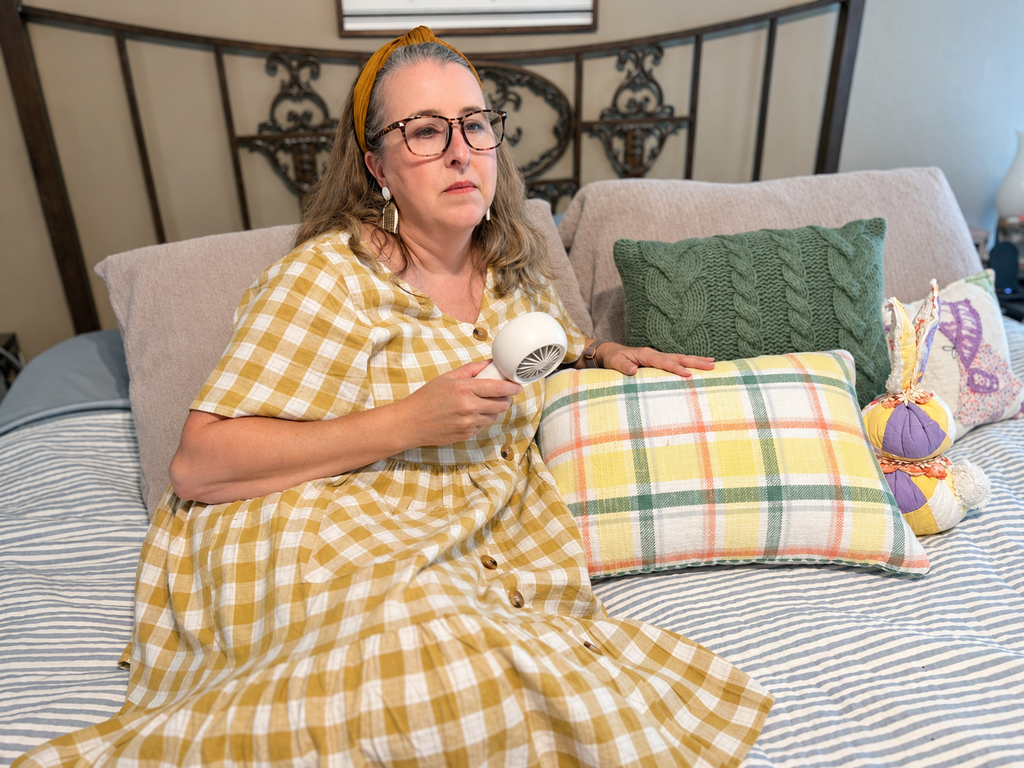
Look at the room itself before assuming you need another bedtime product. A cool, dark, quiet space is a sensible foundation. Reduce unnecessary light, consider whether household noise can be lowered and adjust the temperature to a comfortable level. If you tend to overheat, lightweight layers make it easier to uncover and cover up again as your comfort changes.
Keep the setup easy to manage, especially if shoulder movement is uncomfortable. The best arrangement is one that lets you make small adjustments without a struggle. If hot flashes or night sweats keep interrupting your sleep, bring that up with your clinician; bedroom changes can support comfort, but they may not address the underlying problem.
4. Pay attention to caffeine and evening habits
Notice whether afternoon or evening caffeine seems to follow you into bedtime. Coffee is not the only source, so include tea, energy drinks and other caffeinated items when you look at your routine. Moving caffeine earlier in the day may be a practical experiment without making every evening feel restrictive.
Alcohol can make you feel sleepy initially while contributing to lighter, more interrupted sleep later. It is also worth noticing whether a late heavy meal or an especially busy evening makes settling down harder. Look for patterns and change one manageable habit at a time.
5. Make room for daytime movement
Appropriate daytime movement can be part of a healthy sleep routine. That might mean a walk or another activity that fits your ability and health needs. You don’t have to choose an intense workout for movement to count, and an activity you can comfortably return to is more useful than a plan that feels impossible.
With frozen shoulder, ask your clinician or physical therapist which movements are appropriate and how to work within your limitations. Avoid forcing your shoulder through aggressive stretches or copying an exercise simply because someone online recommends it. A plan for your own shoulder is more helpful than trying to push through pain at bedtime.
6. Don’t lie awake watching the clock
When you are awake and frustrated, repeatedly checking the time can add another layer of pressure. If you are lying there getting increasingly upset, consider getting up for a quiet activity in dim light and returning to bed when you feel sleepy. Choose something calm rather than starting chores or opening an absorbing social media feed.
For ongoing insomnia, sleep hygiene tips alone may not be enough. The National Heart, Lung, and Blood Institute recommends cognitive behavioral therapy for insomnia, or CBT-I, as the usual first treatment for long-term insomnia. A qualified professional can help you work on the thoughts and habits that keep the cycle going. If dreams, grief or worry regularly leave you awake, that deserves a compassionate conversation as well.
7. Choose a mattress that fits your needs
Comfort preferences can change as we get older or as our health needs change. Think about your sleep position, the feel you prefer and whether your current mattress still feels comfortable. If you have a medical condition or persistent pain, discuss positioning and support with your clinician. A mattress is not a treatment for frozen shoulder or hot flashes.
Disclosure: Nest Bedding provided the mattress for my gift guides, where that relationship is disclosed. This article is an additional editorial piece, not a sponsored article. I purchased the magnesium gummies and castor oil mentioned below myself. This post contains affiliate links; I may earn a commission from qualifying purchases. As an Amazon Associate I earn from qualifying purchases.
One option to consider is the Nest Sparrow Signature Hybrid. Nest lists Plush, Medium and Firm choices and a replaceable comfort layer, so its feel can be adjusted without replacing the entire mattress. According to Nest, the THERMIC® phase-change cover helps regulate heat at the surface, while the coils allow air to circulate. Those features may be useful comfort considerations if you feel hot at night, including during hot flashes. They are the brand’s design claims, not evidence that the mattress treats menopausal symptoms, and I’m not presenting them as results from my own testing.

The home trial also makes the decision feel less permanent: you can try the mattress in your own bedroom and request an eligible return if it isn’t comfortable for you. Nest’s 365-night trial begins at delivery and requires an initial 30-night adjustment period. Its return policy lists free mattress returns after the 30th night within the trial, with a disposal fee for early returns. Proper foundation support and acceptable mattress condition are required; exterior damage can void returns. Leaving it boxed beyond 30 days also voids return privileges, and clearance items are final sale. Review the current terms before ordering, so you understand the options and restrictions.
8. Consider bedtime products carefully
Two products in my personal routine are magnesium gummies, which I take about 30 to 60 minutes before bed, and castor oil, which I apply to my belly button with a roller. I bought both myself. I’m sharing what I use, rather than claiming either product has improved my sleep or recommending that everyone copy my routine.
The gummies I use are VEV Deep Calm Magnesium Complex gummies. This is a combination supplement with other ingredients, so checking the entire label matters. The National Center for Complementary and Integrative Health describes the research on magnesium for insomnia as very limited, with low-quality studies that do not support firm conclusions. Results are uncertain, and a product’s marketing is not proof it will help you sleep. Ask a clinician or pharmacist about supplements, especially if you have kidney problems, take medicines or use other supplements.
The roller is the Queen of the Thrones Organic Castor Oil Rose Quartz Roll-On. Applying castor oil to the belly button is not a proven sleep aid, and there is no established reason to expect special sleep benefits from that location. Cleveland Clinic cautions that castor oil claims often go beyond the evidence and that it can irritate skin. (but it works for me) .Stop using it if irritation develops and seek advice about a reaction. A personal routine is still something to evaluate carefully, even when the product is described as natural.
Give yourself room to find the right support
There isn’t one bedtime routine, mattress or product that will fit every woman. Start with a manageable change, pay attention to your own comfort and give yourself some kindness after a difficult night. When sleep problems, hot flashes, shoulder pain or waking after upsetting dreams continue to affect your rest, reach out to your healthcare professional. Getting help is a practical step toward understanding what you need, and you don’t have to figure it all out alone.
Related Posts
-
Stuart Weitzman Boots Up to 82% Off at Nordstrom Rack
Stuart Weitzman boots are up to 82% off comparable value at Nordstrom Rack, including the Taupe 5050 Strut Block style for $149.97 in select sizes. Prices vary by style, color and size.
-
Ollie Dog Food: 70% Off + Free Holiday Feast
New Ollie customers can save 70% on their first box and receive a free Holiday Feast recipe two-pack, welcome kit and shipping through November 10. This offer starts an automatically renewing subscription.
-
T-Mobile Home Internet $30/Month with AutoPay & Voice Line
Eligible T-Mobile phone customers can get Rely home internet for $30/month with qualifying AutoPay and monthly bill credits, plus taxes and fees. See setup charges and availability details.