Hands-Free Pumping With a Large Bust: What Actually Makes It Work
Multitasking moms love the idea of pumping while answering email, packing lunch, or finally eating both hands free. Hands-free pumping with a large bust adds a practical twist: you are not only managing suction and timers—you are supporting tissue that can fold into a shield, pull straps down, and leak if nothing is holding weight but hope.
Buying the wrong gear twice is expensive. Starting with bras built for a big bust—compare a nursing bra for big bust for band adjustability and cup depth before you add a wearable or bustier—often costs less than a panic Amazon order at midnight. This is general information, not medical advice; see an IBCLC or your clinician for pain, supply drops, or nipple damage.
Is It Harder to Pump With a Large Bust?
It can take more positioning and support—not because your body pumps “wrong,” but because your bra, tissue, and flange need to work together. Heavy tissue can bunch under the flange, break the seal, and leave you soaked or still full when the timer beeps. Shoulders and upper back pick up slack when a bra or your hands do not lift the bust evenly.
Flange size still follows nipple diameter, not cup letter. A very full bust can pair with a small or medium shield. The hard part is positioning, not guessing size from bra tags. The right flange fit and stable support can make setup easier. If comfort or output remains a problem, ask an IBCLC to assess a session.
What You Need Before Going Hands-Free
Hands-free means your hands are not holding the shields, not that setup is zero effort. A short checklist saves repeat buys:
- Sized flanges or inserts—inspect valves and membranes and replace them according to the manufacturer’s instructions
- A pumping bra or bustier that closes firmly around the shield without compressing the whole bust
- Mirror or phone camera for the first few tries—centered nipples beat guessing
- Pads and a spare top—letdown does not wait for meetings to end
Test at home on a weekend before relying on a wearable while away from home. If milk pools under the flange when you release your hand, fix support before you go mobile.
Which Hands-Free Pump Is Best for a Large Bust?
There is no single “best” pump for every large chest—marketing loves a one-size winner, but your nipple size, letdown pattern, and daily schedule matter more than a chart on a box. Use criteria instead of brand hype:
- Shield compatibility: Can you use the flange size an IBCLC measured, or are you stuck with fixed cups?
- Cup capacity and angle: Larger collectors help if you express a lot per session; cups should sit without pinching outer tissue
- Suction pattern you tolerate: Strong is not always better; white nipples or pain mean turn down, not power up
- Weight and noise: Wearables trade discretion for bulk; some heavy-chest parents prefer a classic double pump plus a solid bustier
- Clean-up time: More parts can mean more midnight dishes—factor that into “convenience”
Check return policies before opening or using a pump. Do not borrow a single-user pump. If renting, choose a model designed for multiple users and use your own accessory kit, as the FDA explains in its pump buying and rental guidance. A pump that works for your sister’s B cup story may fail your G cup geometry for one simple reason: fit, not failure.
Is a Wearable Pump Good for a Fuller Bust?
It can be—for some sessions, some bodies, some outfits. Wearables hide under looser tops and free your hands, but they add weight on the chest wall and depend on a snug bra band. With a fuller bust, cups may shift or lose their seal when you bend. Follow the pump’s fit instructions and check that your bra supports the cups without squeezing.
Wearables shine for short catch-up sessions or travel days. Many fuller-bust parents mix tools: wearable for a scheduled session before a school pickup, traditional double pump with a bustier for another scheduled session. Hybrid is smart, not cheating.
What Pumping Bras Are Best for a Very Large Bust?
Skip “best” lists that ignore band size. Look for features that scale with weight:
- Wide band, multiple hooks—look for support from the band as well as the straps
- Firm but not crushing compression—holds flanges, does not leave trenches in skin
- Roomy, supportive cups—provides room for each side without excessive pressure
- Adjustable openings that match your shield width without stretching holes into ovals
- Front closure or zip if reaching behind your back postpartum is its own workout
Some nursing bras double as pumping layers; others are dedicated bustiers. One reliable pumping bra plus one everyday nursing bra beats three “maybe” cheapies that lose elastic in a month.
Between Sessions: Everyday Support
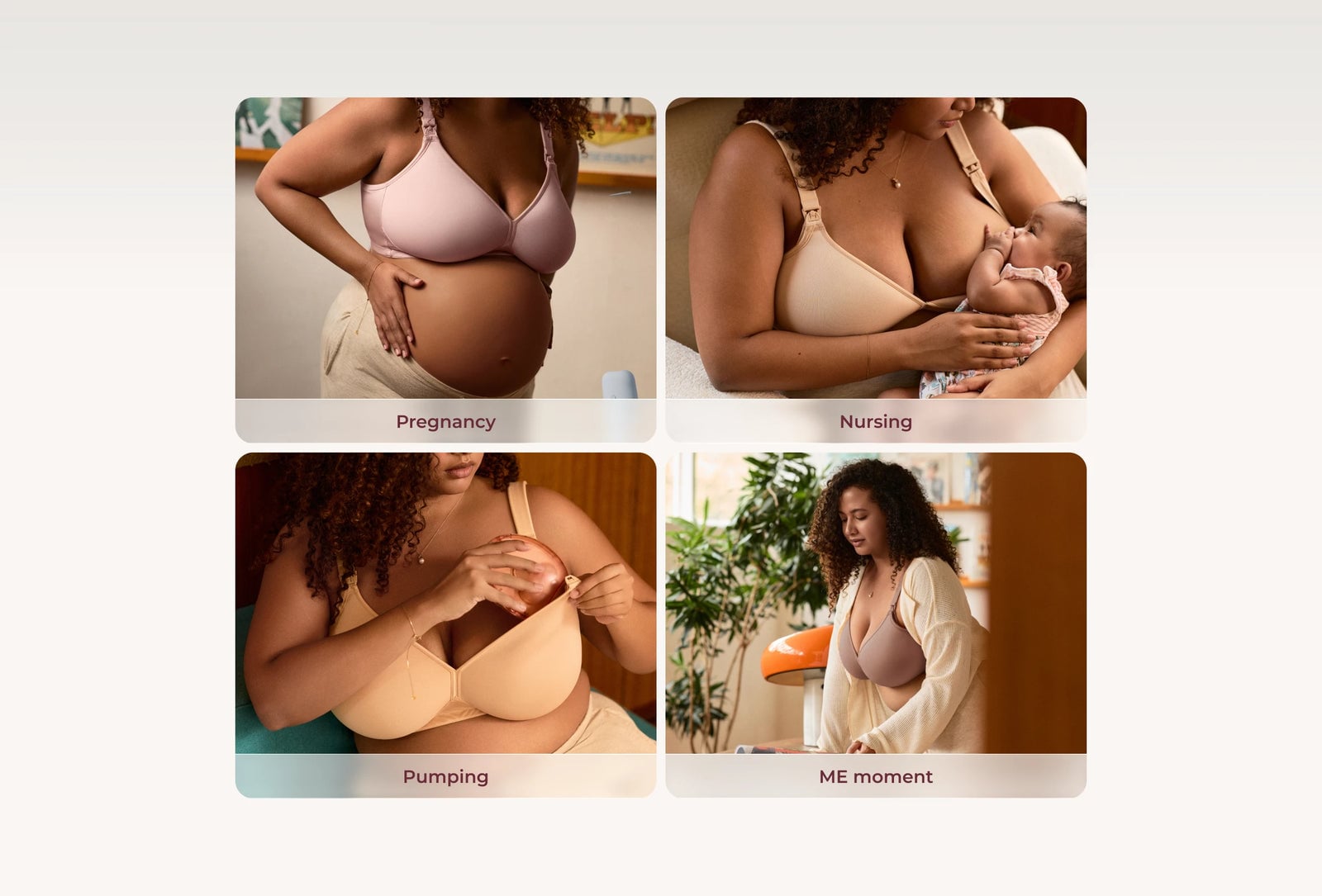
Hands-free gear is for pumping—not necessarily all the hours between sessions. A supportive bra with a comfortable band can help accommodate changes in fullness between sessions. If you run warm or live in layered outfits, breathable fabric can feel less punishing than thick foam.
For daytime when you are not attached to motors, a busty wire-free option like the Momcozy AirMesh Busty Nursing Bra can bridge school drop-off and a mid-morning pump break without the squeeze of a sports bra three sizes too small. One well-chosen bra worn daily beats a drawer of sale-rack mistakes.
What Nursing Bras Do During Pumping Season
A nursing bra and a pumping bra solve different problems, but both need a stable band. During hands-free pumping season, you may live in a bustier for twenty minutes, then switch—or use a hybrid that clips open for nursing and holds shields for pumping. The band should sit level in back; if it crawls up, flanges tilt and leak.
Choose a comfortable design that does not dig into sensitive tissue. Whether it has wires or not, the fit should avoid pressure and pinching. Clips should work one-handed because your other hand is always on a bottle or a toddler. For very large cups, look for depth in the cup, not just a wider strap—depth keeps nipples centered in the shield opening.
Elastic recovery matters if you pump three times a day. Rotating two bras gives you a clean spare while the other is being washed and dried. Follow the care label for washing and drying so you do not damage the support you paid for.
Frugal Fixes That Do Not Sacrifice Fit
Savvy shopping does not mean skipping size help. Check whether your insurance or local support services cover an IBCLC flange check before paying for more shield packs. Buy pumping bras on return-friendly sites when possible, and keep tags until a home test with your pump passes.
If you still feel uncomfortably full after a session, ask an IBCLC to check fit and your pumping routine. Avoid adding extra pumping simply to chase an “empty” feeling. NHS mastitis guidance advises against expressing more milk than your baby needs. Use clean, washable nursing pads if they suit you, and change them when damp.
If you are planning other nursery or feeding purchases, our baby essentials shopping roundup can help you build a list. Check current prices before buying, since offers change.
When to Pause and Get Help
- Nipple damage that worsens after flange or bra changes
- A hot, swollen, painful area, fever, or flu-like symptoms: contact your healthcare professional promptly
- Output dropping for several days despite consistent schedule
- Hands-free cups that never maintain seal after multiple adjustments
An IBCLC can watch a session with your actual bra and pump—worth more than another impulse buy.
FAQ
Which hands-free pump is best for a large bust?
The one that fits your nipple size, maintains a seal with your bra, and allows comfortable pumping without pain. Compare flange options, cup shape, and cleanup—not influencer lists—before you commit.
Is it harder to pump with a large bust?
It can be harder to position and support tissue, not necessarily to make milk. Proper shields, lift, and a stable hands-free bra usually level the field.
What pumping bras are best for a very large bust?
Look for wide bands, multiple hooks, separated cups, and openings that match your shields without crushing bust tissue. Dedicated pumping bustiers or sturdy hybrid nursing-pump bras often outperform flimsy one-size “hands-free” bands.
Is a wearable pump good for a fuller bust?
It works well for some people and some outings; others prefer a traditional pump plus bustier. Test seal and comfort while moving around before relying on it for long sessions.
Hands-free pumping with a large chest is a systems problem: flange, bra, pump, and schedule. Nail support first, buy smart second, and give each tweak a few sessions while monitoring comfort and output. Seek help promptly for pain or injury. Your back—and your wallet—will notice when the setup finally stays put.
Follow the manufacturer’s cleaning directions. The CDC pump-cleaning guide explains how to clean milk-contact parts after every use and when sanitizing adds protection.