Realistic Weight Loss Habits Women Are Turning To in 2026 (That Actually Fit Real Life)
Let’s be honest, most of us have tried at least one “quick fix” when it comes to weight loss. Whether it is cutting carbs completely, skipping meals, buying into the latest detox trend, or throwing ourselves into an intense fitness plan overnight, it often starts with good intentions and ends in frustration.
The problem is not a lack of effort. It is that many of these approaches are simply not built for real life. Work, family, social plans, stress, and energy levels all play a role, and when a plan does not account for those things, it becomes very difficult to stick to.
Lately though, there has been a noticeable shift. Instead of chasing extremes, more women are focusing on approaches that feel realistic, flexible, and sustainable. The goal is no longer to lose weight as quickly as possible, but to build habits that actually last.
Here are some of the most common changes people are making in 2026.

1. Focusing on appetite, not just willpower
For a long time, weight loss advice centred around discipline. Eat less, move more, stay consistent. While that still plays a role, many people are starting to recognise that appetite is a huge part of the equation.
Hunger, cravings, and energy dips can make even the most motivated person struggle. Ignoring those signals often leads to cycles of restriction followed by overeating, which can feel frustrating and discouraging.
Instead, there is more focus now on understanding what drives hunger in the first place. That could mean improving sleep, managing stress, or choosing foods that help you feel fuller for longer.
By working with your body rather than against it, the whole process tends to feel more manageable.
2. Building meals that actually keep you full
Another major shift is moving away from restrictive diets and towards balanced, satisfying meals.
Rather than eliminating entire food groups, people are starting to ask a simpler question. Will this meal actually keep me full?
In most cases, that comes down to a few key things:
● Protein, which helps with satiety and muscle maintenance
● Fibre, which supports digestion and keeps you feeling fuller for longer
● Healthy fats, which slow digestion and add satisfaction
This does not mean every meal has to be perfect. It just means being a bit more intentional about building meals that do not leave you hungry an hour later.
Over time, this approach naturally helps reduce snacking and overeating without feeling overly restrictive.
3. Taking a more flexible approach to food
One of the biggest reasons people struggle with weight loss is the all or nothing mindset.
You start the week with a strict plan, something changes, and suddenly it feels like everything is off track. That often leads to giving up completely and starting again the following week.
In 2026, more people are moving away from that way of thinking. Instead of aiming for perfection, the focus is on flexibility.
That might mean:
● Enjoying meals out without guilt
● Having treats in moderation rather than cutting them out entirely
● Adjusting your routine when life gets busy instead of abandoning it
This kind of approach is far more realistic, especially over the long term. It allows you to stay consistent without feeling like you are constantly starting over.
4. Exploring extra support when needed
For some people, even with better habits in place, progress can still feel slow or difficult. This is particularly true for those who struggle with appetite regulation or long term weight management.
As a result, there has been a growing openness around medically supported options.
Treatments like Wegovy weight loss injections are designed to work with your body’s natural hunger signals. They can help reduce appetite, support portion control, and make it easier to maintain a calorie deficit without feeling constantly hungry.
For many, the appeal is not about finding a shortcut, but about having additional support alongside lifestyle changes.
What is important to remember is that these options are not a replacement for building healthier habits. They are simply another tool that may be appropriate for some people, depending on their individual situation.
5. Moving more without overdoing it
Exercise is still an important part of any weight loss journey, but the way people approach it is changing.
Instead of jumping into intense routines that are difficult to maintain, there is more emphasis on consistency and enjoyment.
For many, that looks like:
● Walking more throughout the day
● Short, manageable workouts at home
● Strength training a few times per week
● Finding activities they genuinely enjoy
This shift makes it much easier to stay active long term. It also reduces the risk of burnout, which is often what causes people to stop altogether.
The idea is simple. Doing something regularly is far more effective than doing everything for a short period of time.
6. Prioritizing sleep and stress management
Another area that is getting more attention is the role of sleep and stress in weight management.
Poor sleep can disrupt hunger hormones, increase cravings, and reduce energy levels. Stress can have a similar effect, often leading to emotional eating or a lack of motivation.
Because of this, more people are starting to treat sleep and stress as part of their overall approach, rather than something separate.
Simple changes like improving bedtime routines, reducing screen time before bed, or finding ways to manage stress can have a surprisingly big impact over time.
7. Tracking progress in different ways
Traditionally, weight loss has been measured almost entirely by the number on the scales. While that can be useful, it does not always tell the full story.
In 2026, there is more focus on other forms of progress, such as:
● How clothes fit
● Energy levels throughout the day
● Strength and fitness improvements
● Overall confidence and wellbeing
This helps create a more balanced perspective and reduces the pressure that often comes with scale based goals.
8. Letting go of unrealistic timelines
Another important shift is around expectations.
Many people go into a weight loss journey hoping for fast results, often influenced by what they see online. When progress does not match those expectations, it can feel discouraging.
Now, there is a growing understanding that sustainable weight loss takes time.
Slower progress that is maintained over months tends to lead to far better long term outcomes than rapid changes that are difficult to sustain.
This change in mindset can make the whole process feel far less stressful and much more achievable.
The bottom line
The biggest change in 2026 is not a new diet or a new trend. It is a more realistic approach to weight loss.
One that works with your lifestyle, not against it.
Instead of relying on extremes, more women are focusing on building habits they can actually maintain. That might include improving nutrition, moving more consistently, prioritising sleep, or exploring additional support where appropriate.
There is no single solution that works for everyone, and that is exactly the point. The goal is to find an approach that fits your life, supports your health, and feels sustainable in the long run.
Because when something feels manageable, it becomes much easier to stick with. And that is where real progress happens.
-
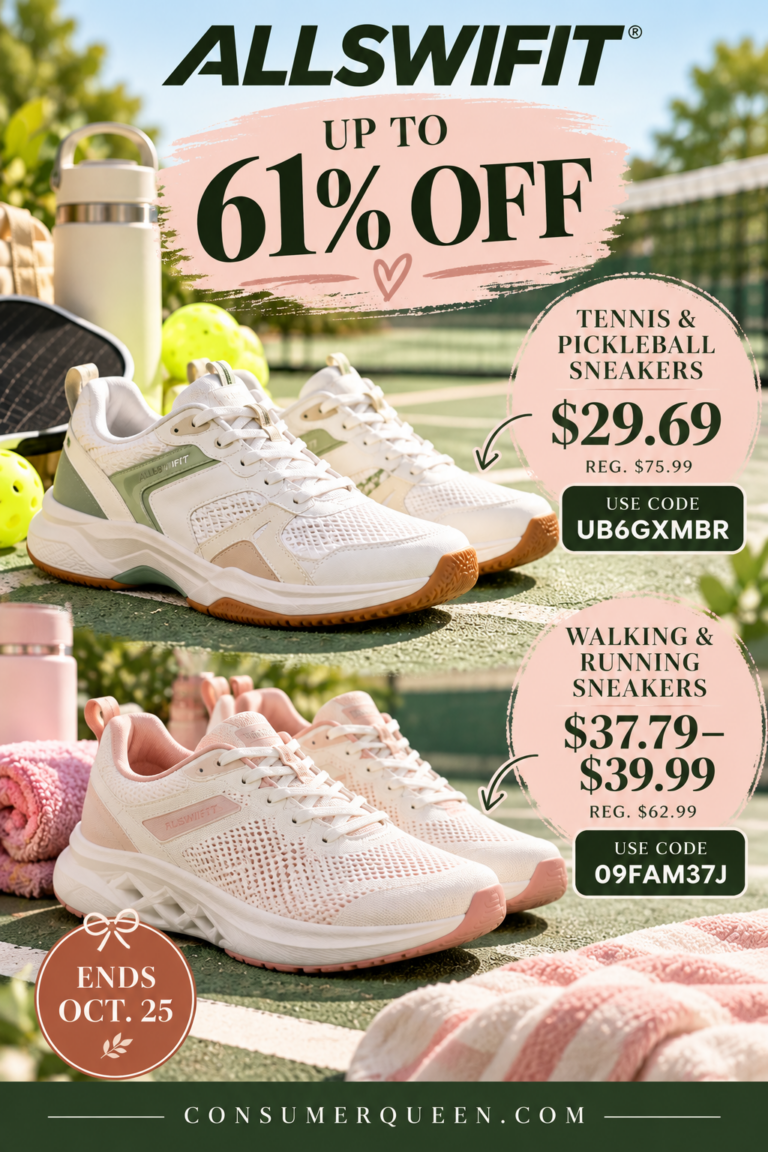
ALLSWIFIT Women’s Sneakers: Save Up to 61% on Amazon!
If you’re looking for a comfortable new pair of sneakers without paying full price, Amazon has two ALLSWIFIT shoe promotions worth checking out!
Right now, shoppers can save up to 61% on select ALLSWIFIT Women’s Sneakers, with prices starting at just $29.69 after the advertised discounts and promotional codes.
The ALLSWIFIT Women’s Tennis Pickleball Sports Fashion Sneakers are regularly priced at $75.99, but a price drop combined with promo code UB6GXMBR brings the advertised price to just $29.69.
That’s approximately 61% off the regular price!
If you’re shopping for everyday footwear, the ALLSWIFIT Women’s Walking Shoes Running Tennis Sneakers are also discounted.
Regularly $62.99, these sneakers are advertised for $37.79–$39.99 when you apply promotional code 09FAM37J.
That means shoppers can save approximately 36%–40%, depending on the eligible option.
Both styles offer sporty designs that could work well for casual outfits, everyday errands, or recreational activities.
The promotional offers are scheduled to expire October 25, 2026.
Keep in mind that discounts may vary by color, size, and availability. Promotional codes must be applied to qualifying items, and shoppers should verify the final price at checkout before ordering.
-
Groupon Fall Reset Sale: Up to 30% Off Spa Treatments!
If you’ve been wanting to treat yourself to a little relaxation, Groupon has a fall promotion worth checking out!
The Groupon Fall Reset Sale is offering up to 30% off select massages, spa services, and head spa treatments through October 25, 2026.
Whether you’re interested in booking a relaxing massage, exploring a new spa, or trying a head spa treatment, this promotion could help you save on a little well-deserved self-care.
Head spa experiences are an especially fun option for anyone who enjoys scalp massages and relaxing beauty treatments.
These experiences can also make thoughtful gifts for birthdays, holidays, or someone who could use a little pampering.
Because Groupon features offers from local businesses, participating services, pricing, and availability will vary depending on your location.
Before purchasing, be sure to review the individual offer’s appointment requirements, expiration dates, and redemption restrictions.
The Groupon Fall Reset Sale is scheduled to end October 25, so don’t wait too long to browse the available experiences!
-
Kohl’s Fall Sale: Sweaters From $19.99 and Boots From $17.99
If you’re looking to refresh your fall wardrobe without breaking the bank, Kohl’s has some great deals happening right now!
The Kohl’s Fall Sale features discounts on select clothing, shoes, and home essentials through October 25, 2026.
Shoppers can find sweaters starting at just $19.99, compared with regular prices of $29.99 to $39.99. Select boots start at $17.99, while long-sleeve tees are available from $7.99.
There are home deals, too! Select bath towels start at just $3.99, making this a convenient opportunity to refresh your linens before holiday guests arrive.
Kohl’s is also offering $10 Kohl’s Cash for every $50 spent on qualifying purchases through October 25. The earned Kohl’s Cash can be redeemed October 26 through November 1, 2026.
Whether you’re shopping for cozy sweaters, practical fall footwear, or everyday home essentials, this sale offers several budget-friendly options.
The advertised offers are available on select merchandise, and prices, sizes, and availability may vary. Shoppers should review Kohl’s Cash terms and exclusions before purchasing.
The sale is scheduled to end October 25, so now is a good time to browse before popular styles and sizes sell out.
-
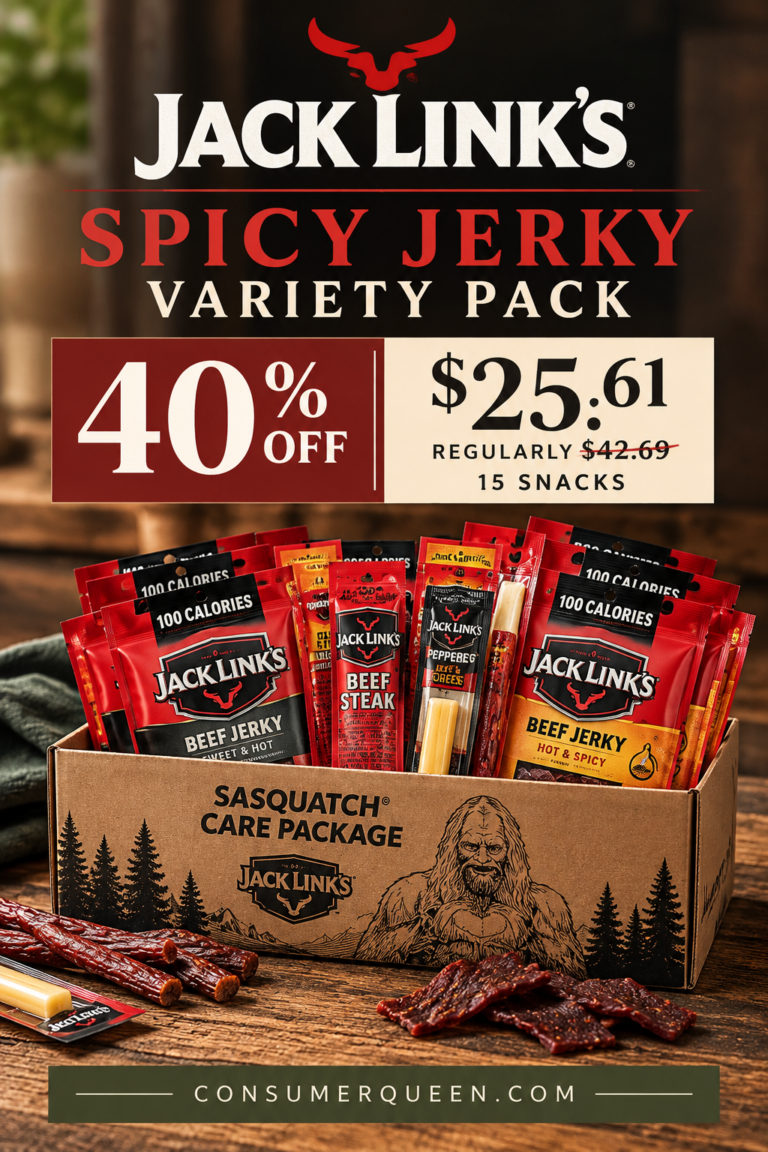
Jack Link’s Jerky Variety Pack: Save 40% on 15 Snacks!
Amazon has a limited-time deal on the Jack Link’s Spicy Beef Jerky Variety Pack, bringing the 15-count assortment down to just $25.61, compared with its typical price of $42.69!
That’s a 40% discount, saving shoppers $17.08.
The assortment includes a mix of spicy beef jerky, steak snacks, and meat stick and cheese combinations. Each snack is individually packaged, making them convenient for road trips, work breaks, outdoor adventures, and everyday snacking.
The box is packaged as a Jack Link’s Sasquatch Care Package, making it a fun gift idea for beef jerky fans, college students, or anyone who enjoys savory snacks.
At the sale price, the cost works out to approximately $1.71 per snack.
Amazon also displays a possible additional Subscribe & Save coupon for eligible orders, although availability and terms may vary.
This is a limited-time promotion, and prices can change at any time. Shoppers should confirm the current discount before ordering.
-
Bluetooth Smart Glasses Just $9.99 on Amazon — 74% Off!
Amazon has a Lightning Deal on OhO Open Ear Bluetooth Smart Glasses, bringing the black-lens version down to just $9.99, compared with a typical price of $39!
That’s a 74% discount and $29.01 in savings.
These lightweight Bluetooth sunglasses feature built-in open-ear speakers, allowing users to listen to music, podcasts, and other audio without traditional earbuds.
They also support hands-free phone calls and voice control, with the manufacturer advertising up to 10 hours of playback time.
The polarized lenses feature UV400 protection, making the glasses a convenient accessory for walks, outdoor activities, and everyday errands.
Unlike more expensive smart glasses, these are designed primarily for Bluetooth audio rather than augmented-reality displays or photography.
At under $10, they could make a fun tech gift or stocking stuffer.
The Lightning Deal is available for a limited time, and the discount may disappear when the timer expires or deal inventory sells out. Prices and availability may change.
-
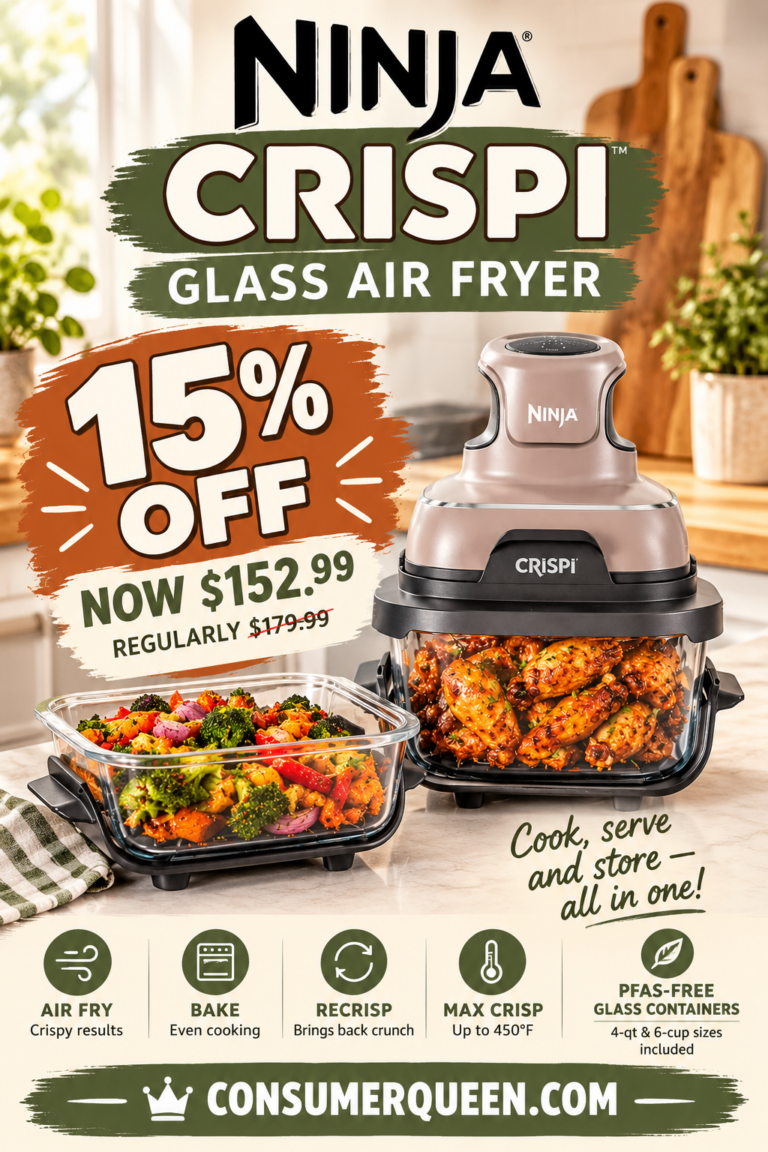
Ninja Crispi Air Fryer: Save 15% on Glass 4-in-1 Model
Looking for a versatile kitchen appliance that makes everyday cooking easier? Amazon has a limited-time deal on the Ninja Crispi 4-in-1 Glass Air Fryer!
The Stone-colored model is currently $152.99, regularly $179.99, saving shoppers $27 or 15%.
This unique cooking system features removable glass containers rather than a traditional air fryer basket. It includes a 4-quart container for larger portions and a 6-cup container for smaller meals.
With four cooking functions—Max Crisp, Bake, Air Fry, and Recrisp—the Ninja Crispi can handle everything from crispy chicken to roasted vegetables and reheated leftovers.
The PFAS-free glass containers offer a convenient way to cook, serve, and store food with fewer dishes.
Whether you’re shopping for a kitchen upgrade or getting a head start on holiday gifts, this deal is worth considering.
Amazon prices and availability may change, so shoppers should confirm the current discount before ordering.